

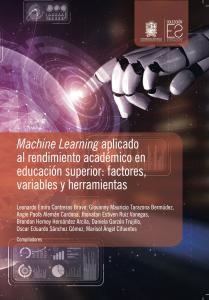
Machine Learning aplicado al rendimiento académico en educación superior: factores, variables y herramientas
Sinopsis
Las herramientas de aprendizaje automático están siendo muy utilizadas por sus buenas aproximaciones al predecir el rendimiento académico de los estudiantes. Se analiza información de la última década con el objetivo de identificar los factores que influyen sobre el rendimiento académico en el nivel superior, a partir de modelos realizados por medio de técnicas de aprendizaje automático. Se plantea una clasificación en factores académicos, sociodemográficos, de aprendizaje en línea, de gestión académica, psicosocial y de entorno académico. También se identifican los algoritmos más usados en su predicción.
Adicionalmente, la detección de las variables que más influyen en el fenómeno permitirá implementar algoritmos de Machine Learning pertenecientes a otras ramas de este campo. Así pues, al ahondar un poco más en la aplicación de herramientas de Machine Learning en educación superior, este trabajo servirá a docentes e investigadores que deseen investigar estos temas.
Capítulos
-
Capítulo 1Contextualización del tema de investigación y su desarrollo
-
Capítulo 2Rendimiento académico
-
Capítulo 3Machine Learning
-
Capítulo 4Aprendizaje no supervisado: factores y variables que influyen en el rendimiento académico
-
Capítulo 5Aprendizaje no supervisado: investigación referencial
-
Capítulo 6Aprendizaje no supervisado: algoritmos implementados
-
Capítulo 7Aprendizaje supervisado: Factores y variables que influyen en el rendimiento académico
-
Capítulo 8Aprendizaje supervisado: Investigación referencial
-
Capítulo 9Aprendizaje supervisado: Algoritmos implementados
-
Capítulo 10Redes Neuronales: factores y variables que influyen en el rendimiento académico
-
Capítulo 11Redes neuronales: Investigación referencial
-
Capítulo 12Redes neuronales: algoritmos implementados
-
Capítulo 13Análisis de software usados/relacionados con Machine Learning aplicado al rendimiento académico en educación superior
Descargas
Los datos de descarga aún no están disponibles.
Referencias
Un poco de Java (2016). ¿Qué es H2O? https://unpocodejava.com/2016/03/29/que-es-h2o/#:~:text=H2O%20es%20una%20plataforma%20Machine,Amazon%20S3%20y%20BD%20NoSQL
Abu, A. (2016). Educational data mining & students’ performance prediction. International Journal of Advanced Computer Science and Applications, 7(5). https://doi.org/10.14569/ijacsa.2016.070531
Abubakar, Y. y Nor Bahiah Hj, A. (2017). Prediction of students’ performance in e-learning environment using random forest. International Journal of Innovative Computing, 7(2), 1-5.
Acharya, A. y Sinha, D. (2014). Early prediction of students performance using machine learning techniques. International Journal of Computer Applications, 107(1), 37-43. https://doi.org/10.5120/18717-9939
Addinsoft. (2021). Agglomerative Hierarchical Clustering (AHC).
Adekitan, A. I. y Noma-Osaghae, E. (2018). Data mining approach to predicting the performance of first-year student in a university using the admission requirements. Education and Information Technologies, 24, 1527-1543. https://doi.org/10.1007/s10639-018-9839-7
Adekitan, A. I. y Salau, O. (2019). The impact of engineering students’ performance in the first three years on their graduation result using educational data mining. Heliyon, 5(2), e01250. https://doi.org/10.1016/j.heliyon.2019.e01250
Adhatrao, K., Gaykar, A., Dhawan, A., Jha, R. y Honrao, V. (2013). Predicting students’ performance using ID3 and C4.5 classification algorithms. International Journal of Data Mining & Knowledge Management Process, 3(5), 39-52. https://doi.org/10.5121/ijdkp.2013.3504
Adnan, M., Habib, A., Ashraf, J., Shah, B. y Ali, G. (2020). Improving M-learners’ performance through deep learning techniques by leveraging features weights. IEEE Access, 8, 131088-131106. https://doi.org/10.1109/ACCESS.2020.3007727
Agrusti, F., Mezzini, M. y Bonavolontà, G. (2020). Deep learning approach for predicting university dropout: a case study at Roma Tre University. Journal of E-Learning and Knowledge Society, 16(1), 44-54. https://doi.org/10.20368/1971-8829/1135192
Aher, S. B. y Lobo, L. M. R. J. (2013). Prediction of course selection in e-learning system using combined approach of unsupervised learning algorithm and association rule. Communications in Computer and Information Science, 296. Springer, Berlin, Heidelberg. https://doi.org/10.1007/978-3-642-35864-7_22
Ahmad A., Nasheen Nur, A. Aileen, B., Erfan Al-Hossami, M., Wenwen Dou, M. y X. N. (2020). Making sense of student success and risk through unsupervised machine learning and interactive storytelling. En I. Bittencourt, M. Cukurova, K. Muldner, R. Luckin, E. Millán (Eds), Artificial Intelligence in Education. https://doi.org/10.1007/978-3-030-52237-7_1
Ahmad, N. B., Alias, U. Mohamad, N. y Yusof, N. (2019). Principal component analysis and self-organizing map clustering for student browsing behaviour analysis for student browsing behaviour analysis. Procedia Computer Science, 163, 550-559. https://doi.org/10.1016/j.procs.2019.12.137
Aissaoui, O., El Madani, Y., Oughdir, L. y Allioui, Y. (2019). Combining supervised and unsupervised machine learning algorithms to predict the learners’ learning styles. Procedia Computer Science, 148, 87–96. https://doi.org/10.1016/j.procs.2019.01.012
Ajibade, S. S. M., Bahiah Binti Ahmad, N. y Mariyam Shamsuddin, S. (2019). Educational data mining: enhancement of student performance model using ensemble methods. IOP Conference Series: Materials Science and Engineering, 551(1). https://doi.org/10.1088/1757-899X/551/1/012061
Al-Barrak, M. A. y Al-Razgan, M. (2016). Predicting Students Final GPA Using Decision Trees: A Case Study. International Journal of Information and Education Technology, 6(7), 528-533. https://doi.org/10.7763/ijiet.2016.v6.745
Albán, M. (2019). Contribuciones a la predicción de la deserción universitaria a través de minería de datos. [Tesis Doctoral, Universidad Nacional Mayor de San Marcos]. https://hdl.handle.net/20.500.12672/10776
Alloghani, M., Al-Jumeily, D., Hussain, A., Aljaaf, A. J., Mustafina, J. y Petrov, E. (2019). Application of machine learning on student data for the appraisal of academic performance. Proceedings – International Conference on Developments in ESystems Engineering, 157-162. https://doi.org/10.1109/DeSE.2018.00038
Almasri, A., Alkhawaldeh, R. S. y Çelebi, E. (2020). Clustering-Based EMT Model for predicting student performance. Arabian Journal for Science and Engineering, 45(12), 10067-10078. https://doi.org/10.1007/s13369-020-04578-4
Alonso, A. y Marcela, C. (2016). Unsupervised learning to describe the influence on the academic achievment on students since his learning, Revista Ingenio, 10(1), 101-107. https://orcid.org/0000-0003-2932-3383
Alshabandar, R., Hussain, A., Keight, R. y Khan, W. (2020). Students performance prediction in online courses using machine learning algorithms. 2020 International Joint Conference on Neural Networks (IJCNN), 1-7. https://doi.org/10.1109/IJCNN48605.2020.9207196
Altaf, S., Soomro, W. y Rawi, M. I. M. (2019). Student performance prediction using multi-layers artificial neural networks. Proceedings of the 2019 3rd International Conference on Information System and Data Mining - ICISDM 2019, 59-64. https://doi.org/10.1145/3325917.3325919
Álvarez Blanco, J., Lau Fernández, R., Pérez Lovelle, S. y Leyva Pérez, E. C. (2016). Predicción de resultados académicos de estudiantes de informática mediante el uso de redes neuronales. Ingeniare. Revista Chilena de Ingeniería, 24(4), 715-727. https://doi.org/10.4067/S0718-33052016000400015
Alyahyan, E. y Düştegör, D. (2020). Predicting Academic Success in Higher Education: Literature Review and Best Practices. International Journal of Educational Technology in Higher Education, 17(1), 3, https://doi.org/10.1186/s41239-020-0177-7
Aman, F., Rauf, A., Ali, R., Iqbal, F. y Khattak, A. M. (2019). A Predictive Model for Predicting Students Academic Performance. 10th International Conference on Information, Intelligence, Systems and Applications, IISA 2019, 1-4. https://doi.org/10.1109/IISA.2019.8900760
Amaya, K., Barrientos, E. y Heredia, J. (2014). Modelo predictivo de deserción estudiantil utilizando técnicas de minería de datos. Mining Techniques, 13(9), 3127-3134.
Anderson, H., Afshan, B. y Baker, R. (2019). Predicting Graduation at a Public R1 University Predicting Graduation at a Public R1 University. 2012(February), 1-4. https://doi.org/10.13140/RG.2.2.26852.83840
Arumugam, S., Kovalan, A. y Narayanan, A. E. (2019). A learning performance assessment model using neural network classification methods of e-learning activity log data. 2019 International Conference on Smart Systems and Inventive Technology (ICSSIT), 441-448. https://doi.org/10.1109/ICSSIT46314.2019.8987958
Asif, R., Merceron, A., Ali, S. A. y Haider, N. G. (2017). Analyzing undergraduate students’ performance using educational data mining. Computers and Education, 113, 177-194. https://doi.org/10.1016/j.compedu.2017.05.007
Aydoğdu, Ş. (2020). Predicting student final performance using artificial neural networks in online learning environments. Education and Information Technologies, 25(3), 1913-1927. https://doi.org/10.1007/s10639-019-10053-x
Badr, G., Algobail, A., Almutairi, H. y Almutery, M. (2016). Predicting students’ performance in university courses: a case study and tool in KSU Mathematics Department. Procedia Computer Science, 82, 80-89. https://doi.org/10.1016/j.procs.2016.04.012
Bahadir, E. (2016). Using neural network and logistic regression analysis to predict prospective mathematics teachers’ academic success upon entering graduate education. Educational Sciences: Theory & Practice, 16(3), 943-964. https://doi.org/10.12738/estp.2016.3.0214
Baker, R. S. (2014). Educational data mining: an advance for intelligent systems in education. IEEE Intelligent Systems, 29(3), 78-82. https://doi.org/10.1109/MIS.2014.42
Balakrishnan, G. (2013). Predicting student retention in massive open online courses using Hidden Markov Models [Reporte técnico]. University of California at Berkeley. https://www2.eecs.berkeley.edu/Pubs/TechRpts/2013/EECS-2013-109.html
Bapu, G., Ashok, M., Shamrao, S. y Tanaji, S. (2015). Clustering Moodle data as a tool for profiling students existing system. International Journal of Advanced Research in Computer Engineering & Technology (IJARCET), 4, 121-126.
Barrios, J. (2022). Fusionando las tecnologías digitales y la salud. https://www.juan-barrios.com/inteligencia-artificial-y-machinE-Learning-para-todos/
Based, C. (2009). Modelos G. Encyclopedia of Biometrics. https://doi.org/10.1007/978-0-387-73003-5_334
Battaglia, O. Paola, B. y Fazio, C. (2016). A New Approach to Investigate Students’ Behavior by Using Cluster Analysis as an Unsupervised Methodology in the Field of Education. Applied Mathematics, 7(15), 1649-1673. https://doi.org/10.4236/am.2016.715142
Bey, A., Pérez-Sanagustín, M. y Broisin, J. (2019). Unsupervised Automatic Detection of Learners’ Programming Behavior. En M. Scheffel, J. Broisin, V. Pammer-Schindler, A. Ioannou, J. Schneider (Eds), Transforming Learning with Meaningful Technologies. EC-TEL 2019. Lecture Notes in Computer Science, 11722. https://doi.org/10.1007/978-3-030-29736-7_6
Bhakti, H. D. (2019). Aplikasi Artificial Neural Network (ANN)sar untuk Memprediksi Masa Studi Mahasiswa Program Studi Teknik Informatika Universitas Muhammadiyah Gresik. Eksplora Informatika, 9(1), 88-95. https://doi.org/10.30864/eksplora.v9i1.234
Bhalchandra, P., Muley, A., Joshi, M., Khamitkar, S., Darkunde, N., Lokhande, S. y Wasnik, P. (2016). Prognostication of Student’s Performance: An Hierarchical Clustering Strategy for Educational Dataset. Advances in Intelligent Systems and Computing, 410, 149-157. https://doi.org/10.1007/978-81-322-2734-2_16
Bhutto, S., Siddiqui, I. F., Arain, Q. A. y Anwar, M. (2020). Predicting Students’ Academic Performance Through Supervised Machine Learning. ICISCT 2020. 2nd International Conference on Information Science and Communication Technology. https://doi.org/10.1109/ICISCT49550.2020.9080033
Botelho, A. F., Varatharaj, A., Patikorn, T., Doherty, D., Adjei, S. A. y Beck, J. E. (2019). Developing Early Detectors of Student Attrition and Wheel Spinning Using Deep learning. IEEE Transactions on Learning Technologies, 12(2), 158-170. https://doi.org/10.1109/TLT.2019 .2912162
Burgos, C., Campanario, M. L., Peña, D. de la, Lara, J. A., Lizcano, D. y Martínez, M. A. (2018). Data mining for modeling students’ performance: A tutoring action plan to prevent academic dropout. Computers and Electrical Engineering, 66, 541-556. https://doi.org/10.1016/j.compeleceng.2017.03.005
Burman, I. y Som, S. (2019). Predicting students academic performance using support vector machine. Proceedings 2019 Amity International Conference on Artificial Intelligence, AICAI 2019, 756-759. https://doi.org/10.1109/AICAI.2019.8701260
Cahaya, L., Hiryanto, L. y Handhayani, T. (2017). Student graduation time prediction using intelligent k-medoids algorithm. Proceeding 3rd International Conference on Science in Information Technology: Theory and Application of IT for Education, Industry and Society in Big Data Era, ICSITech 2017, 263-266. https://doi.org/10.1109/ICSITech.2017.8257122
Castrillón, O., Sarache, W. y Ruiz, S. (2020). Predicción del rendimiento académico por medio de técnicas de inteligencia artificial. Revista Formación Universitaria, 13(1), 93-102. https://doi.org/10.4067/S0718-50062020000100093
Castro, J. E. S., Rodríguez, C. C. R., Marín, C. E. M., García, P. A. G. y Castellanos, J. G. (2016). Hacia la construcción de un modelo predictivo de deserción académica basado en técnicas de minería de datos. Revista Científica, 3(26), 35-48.
Chau, L. M., Chau, V. T. N. y Phung, N. H. (2019). On temporal cluster analysis for early identifying in-trouble students in an academic credit system. NICS 2018, Proceedings 5th NAFOSTED Conference on Information and Computer Science, 171-176. https://doi.org/10.1109/NICS.2018.8606827
Cheng, W. y Shwe, T. (2019). Clustering analysis of student learning outcomes based on education data. Proceedings - Frontiers in Education Conference, FIE, 2019-Octob. https://doi.org/10.1109/FIE43999.2019.9028400
Christian, T. M. y Ayub, M. (2014). Exploration of classification using NBTree for predicting students’ performance. Proceedings of 2014 International Conference on Data and Software Engineering, ICODSE 2014, 0–5. https://doi.org/10.1109/ICODSE.2014.7062654
Ciubotariu, G. y Crivei, L. M. (2019). Analysing the academic performance of students using unsupervised data mining. Studia Universitatis Babeș-Bolyai Informatica, 64(2), 34-48. https://doi.org/10.24193/subbi.2019.2.03
Coelho, O. B. y Silveira, I. (2017). Deep learning applied to learning analytics and educational data mining: a systematic literature review. Brazilian Symposium on Computers in Education (Simpósio Brasileiro de Informática na Educação - SBIE)143. https://doi.org/10.5753/cbie.sbie.2017.143
Contreras, L., Fuentes, H. y Rodríguez, J. (2020). Academic interruption model using automatic learning algorithms. International Journal of Mechanical and Production Engineering Research and Development (IJMPERD), 10(3), 16075-16086.
Corrigan, O. y Smeaton, A. F. (2017). A course agnostic approach to predicting student success from VLE log data using recurrent neural networks. European Conference on Technology Enhanced Learning, 545-548. https://doi.org/10.1007/978-3-319-66610-5_59
Costa, E. B., Fonseca, B., Santana, M. A., de Araújo, F. F. y Rego, J. (2017). Evaluating the effectiveness of educational data mining techniques for early prediction of students’ academic failure in introductory programming courses. Computers in Human Behavior, 73, 247-256. https://doi.org/10.1016/j.chb.2017.01.047
Crivei, L. M., Czibula, G., Ciubotariu, G. y Dindelegan, M. (2020). Unsupervised learning based mining of academic data sets for students’ performance analysis. SACI 2020 - IEEE 14th International Symposium on Applied Computational Intelligence and Informatics, Proceedings, 11–16. https://doi.org/10.1109/SACI49304.2020.9118835
Cuadrado Montaña, J. R. (2017). Modelo para la gestión de indicadores y análisis de permanencia estudiantil de usuarios de Bienestar Universitario de la Universidad Nacional de Colombia. [Tesis de Maestría, Universidad Nacional de Colombia]. https://repositorio.unal.edu.co/handle/unal/60137
Cuevas-Tello, J. C. (2018). Apuntes de Redes Neuronales Artificiales. ar-Xiv:1806.05298. https://doi.org/10.48550/arXiv.1806.05298
Cui, Y., Chen, F. y Shiri, A. (2020). Scale up predictive models for early detection of at-risk students: A feasibility study. Information and Learning Sciences, 121(3-4), 97-116. https://doi.org/10.1108/ILS-05-2019-0041
Cuji, B., Gavilanes, W. y Sanchez, R. (2017). Modelo predictivo de deserción estudiantil basado en arboles de decisión Predictive model of student dropout based on decision trees. Espacios, 38(55), 17-26. https://www.revistaespacios.com/a17v38n55/a17v38n55p17.pdf
Das, A. K. y Rodriguez-Marek, E. (2019). A predictive analytics system for forecasting student academic performance: Insights from a pilot project at Eastern Washington University. 2019 Joint 8th International Conference on Informatics, Electronics and Vision, ICIEV 2019 and 3rd International Conference on Imaging, Vision and Pattern Recognition, IcIVPR 2019 with International Conference on Activity and Behavior Computing, ABC 2019, 255–262. https://doi.org/10.1109/ICIEV.2019.8858523
Daza, A. (2016). Un modelo basado en árboles de decisión para predecir la deserción estudiantil en la educación superior privada. Ucv-Scientia, 8(1), 59-73. https://doi.org/10.18050/revucv-scientia.v8n1a7
De La Hoz, E. J. y Fontalvo, T. J. (2019). Methodology of Machine Learning for the Classification and Prediction of Users in Virtual Education Environments. Información Tecnológica, 30(1), 247-254. https://doi.org/10.4067/S0718-07642019000100247
Delen, D. (2010). A Comparative Analysis of Machine Learning Techniques for Student Retention Management. Decision Support Systems, 49(4), 498-506. https://doi.org/10.1016/j.dss.2010.06.003
Dhanalakshmi, D. y Saravanan, A. (2016). Opinion Mining from Student Feedback Data Using Supervised Learning Algorithms. Integrated Series in Information Systems, 36, 183-206. https://doi.org/10.1007/978-1-4899-7641-3_8
Di Gresia, L., Fazio, M. V., Porto, A., Ripani, L., y Sosa Escudero, W. (2005). Rendimiento y productividad de los estudiantes. El caso de las universidades públicas argentinas. En A. Porto (Ed.), Economía de la Educación Universitaria: Argentina, Brasil y Perú. Edulp.
Doleck, T., Lemay, D. J., Basnet, R. B. y Bazelais, P. (2020). Predictive analytics in education: A Comparison of deep learning frameworks. Education and Information Technologies, 25(3), 1951-1963. https://doi.org/10.1007/s10639-019-10068-4
Duan, L. y Xu, L. Da. (2012). Business intelligence for enterprise systems: A survey. IEEE Transactions on Industrial Informatics, 8(3), 679-687. https://doi.org/10.1109/TII.2012.2188804
Durairaj, M. y Vijitha, C. (2014). Educational data mining for prediction of student performance using clustering algorithms. International Journal of Computer Science and Information Technologies, 5(4), 5987-5991.
Dursun, M. & Karsak, E. (2010) A fuzzy MCDM approach for personnel selection. Expert Systems with Applications, 37(6), 4324-433. https://doi.org/10.1016/j.eswa.2009.11.067
Eckert, K. B. y Suénaga, R. (2015). Análisis de deserción-permanencia de estudiantes universitarios utilizando técnica de clasificación en minería de datos. Formacion Universitaria, 8(5), 3-12. https://doi.org/10.4067/S0718-50062015000500002
El Fouki, M., Aknin, N. y El Kadiri, K. E. (2019). Multidimensional approach based on deep learning to improve the prediction performance of DNN models. International Journal of Emerging Technologies in Learning (IJET), 14(02), 30. https://doi.org/10.3991/ijet.v14i02.8873
Escudero, T. (1999). Indicadores del rendimiento académico una experiencia en la Universidad de Zaragoza. In Ministerio de Educación y Cultura. Centro de Publicaciones (Ed.), Indicadores en la Universidad, información y definiciones (pp. 251-262). Ministerio de Educación y Cultura, Consejo de Universidades.
Estrada, J. y Quintero, R. (2015). Bajo rendimiento académico en la Universidad Distrital Francisco José de Caldas. Editorial UD.
Fernandes, E., Holanda, M., Victorino, M., Borges, V., Carvalho, R. y Erven, G. Van. (2019). Educational data mining: predictive analysis of academic performance of public-school students in the capital of Brazil. Journal of Business Research, 94, 335–343, https://doi.org/10.1016/j.jbusres.2018.02.012
Ferreyra, M. M., Avitabile, C., Álvarez, J. B., Francisco Haimovich Paz y Urzúa, S. (2017). Momento decisivo: La educación superior en América Latina y el Caribe. Banco Mundial.
Forero, L., Reina, Y., Molano, J. (2019). Machine Learning for the Identification of Students at Risk of Academic Desertion. En L. Uden, D. Liberona, G. Sanchez, S. Rodríguez-González (Eds), Learning Technology for Education Challenges. LTEC 2019, Communications in Computer and Information Science, 1011. https://doi.org/10.1007/978-3-030-20798-4_40
Formia, S., Lanzarini, L. y Hasperué, W. (2013). Caracterización de la deserción universitaria en la UNRN utilizando minería de datos: Un caso de estudio. TE & ET: Revista Iberoamericana de Tecnología en Educación y Educación en Tecnología, 11, 92-98. https://doi.org/10.24215/18509959.0.p.%2092-98
Forteza, J. (1975). Modelo instrumental de relaciones entre variables motivacionales y rendimiento. Revista de Psicología General y Aplicada, 132, 75-91.
Franzese, M. y Iuliano, A. (2018). Hidden Markov Models. Encyclopedia of Bioinformatics and Computational Biology: ABC of Bioinformatics, 1, 753-762. https://doi.org/10.1016/B978-0-12-809633-8.20488-3
Gad, S. C. y Rousseaux, C. G. (2002). Use and misuse of statistics in the design and interpretation of studies. Handbook of Toxicologic Pathology, 327–418. https://doi.org/10.1016/b978-012330215-1/50016-8
Garbanzo, M. G. (2007). Factores asociados al rendimiento académico en estudiantes universitarios, una reflexión desde la calidad de la educación superior pública. Revista Educación, 31(1), 43-63. http://www.redalyc.org/articulo.oa?id=44031103
García, D. (2016). Construcción de un modelo para determinar el rendimiento académico de los estudiantes basado en learning analytics (análisis del aprendizaje), mediante el uso de técnicas multivariantes. [Tesis Doctoral, Universidad de Sevilla]. http://hdl.handle.net/11441/40436
García, G. (2014). Modelo de Machine Learning para la clasificación de pacientes en términos del nivel asistencial requerido en una urgencia pediátrica con área de cuidados mínimos [Tesis de maestría, Universidad de Sevilla]. https://hdl.handle.net/20.500.12585/1200
García Tinisaray, D. K. (2016). Construcción de un modelo para determinar el rendimiento académico de los estudiantes basado en learning analytics (análisis del aprendizaje), mediante el uso de técnicas multivariantes. [Tesis Doctoral, Universidad de Sevilla]. https://idus.us.es/handle/11441/40436
Gkontzis, A. F., Kotsiantis, S., Tsoni, R. y Verykios, V. S. (2018). An effective LA approach to predict student achievement. Proceedings of the 22nd Pan-Hellenic Conference on Informatics, 76–81.
Goethals, B. y Van den Bussche, J. (2002). Relational Association Rules: Getting WARMER . En D. J. Hand, N. M. Adams y R. J. Bolton (Eds.), Pattern Detection and Discovery. Lecture Notes in Computer Science. Springer. https://doi.org/10.1007/3-540-45728-3_10
Gomes, P. C. T. (2019). Inicio. Machine Learning para Todos. https://machine-learningparatodos.com/
González, D., Picie, J., González, M., Hernández, C. y Onofre, E. (2019). Nodes: Plataforma para la predicción de deserción escolar utilizando técnicas de inteligencia artificial. Journal CIM, 7(1). http://doi.org/10.5281/zenodo.4315354
González, R. (2010). Python para todos.
Gu, D., Shen, J. y Wang, X. (2018). Deep learning for Education. Digital WPI.
Guleria, P. y Sood, M. (2018). Predictive data modeling: educational data classification and comparative analysis of classifiers using Python. PDGC 2018 5th International Conference on Parallel, Distributed and Grid Computing. https://doi.org/10.1109/PDGC.2018.8745727
Guo, B. Zhang, R. Xu, G. Shi, C. y Yang, L. (2016). Predicting students performance in educational data mining. Proceedings 2015 International Symposium on Educational Technology, ISET 2015, 125–128. https://doi.org/10.1109/ISET.2015.33
Guruler, H. y Istanbullu, A. (2014). Modeling student performance in higher education using Data Mining. Studies in Computational Intelligence, 524, 105-124. https://doi.org/10.1007/978-3-319-02738-8_4
Guzmán, C. y Durán, D. (2009). Deserción estudiantil en la educación superior colombiana. Ministerio de Educación Nacional, Republica de Colombia. http://www.mineducacion.gov.co/sistemasdeinformacion/1735/articles-254702_libro_desercion.pdf
Hackeling, G. (2014). Mastering Machine learning with Scikit-Learn: Learn to implement and evaluate machine learning solutions with Scikit-Learn. Packt Publishing Ltd. https://www.smallake.kr/wp-content/uploads/2017/03/Mastering-Machine-Learning-with-scikit-learn.pdf
Hamsa, H., Indiradevi, S. y Kizhakkethottam, J. J. (2016). Student academic performance prediction model using Decision Tree and Fuzzy enetic Algorithm. Procedia Technology, 25, 326–332. https://doi.org/10.1016/j.protcy.2016.08.114
Hasbun, T., Araya, A. y Villalon, J. (2016). Extracurricular activities as dropout prediction factors in higher education using decision trees. 16th International Conference on Advanced Learning Technologies Extracurricular, 242-244. https://doi.org/10.1109/ICALT.2016.66
Hassan, S., Waheed, H., Aljohani, N. R., Ali, M., Ventura, S. y Herrera, F. (2019). Virtual learning environment to predict withdrawal by leveraging deep learning. International Journal of Intelligent Systems, 34(8), 1935-1952. https://doi.org/10.1002/int.22129
Heredia, D., Amaya, Y. y Barrientos, E. (2015). Student dropout predictive model using data mining techniques. IEEE Latin America Transactions, 13(9), 3127-3134. https://doi.org/10.1109/TLA.2015.7350068
Heredia, D. M., Amaya, Y. y Barrientos, E. U. (2015). Student dropout predictive model using data mining techniques. IEEE Latin America Transactions, 13(9), 3127-3134. https://doi.org/10.1109/TLA.2015.7350068
Hernández-Blanco, A., Herrera-Flores, B., Tomás, D. y Navarro-Colorado, B. (2019). A systematic review of deep learning approaches to educational data mining. Complexity, 2019, 1-22. https://doi.org/10.1155/2019/1306039
Hernandez Gonzalez, A. G., Melendez Armenta, R. A., Morales Rosales, L. A., Garcia Barrientos, A., Tecpanecatl Xihuitl, J. L. y Algredo, I. (2016). Comparative study of algorithms to predict the desertion in the students at the ITSM-Mexico. IEEE Latin America Transactions, 14(11), 4573–4578, https://doi.org/10.1109/TLA.2016.7795831
Hidayah, I., Adji, T. B., Setiawan, N. A. y Maharani, K. (2016). Work in progress: application of unsupervised learning method toward student’s metacognition assessment. IEEE Global Engineering Education Conference, EDUCON, 1175-1178. https://doi.org/10.1109/EDUCON.2016.7474704
Higuchi, K. (2021). KHCODER. 2021. Hu, Y.-H., Lo, C.-L. y Shih, S.-P. (2014). Developing early warning systems to predict students’ online learning performance. Computers in Human Behavior, 36, 469-478. https://doi.org/10.1016/j.chb.2014.04.002
Hua Leong, F. y Lindsay, M. (2016). Modeling engagement of programming students using unsupervised machine learning technique. GSTF Journal on Computing (JOC), 6(1), 1-6. https://doi.org/10.5176/2251-3043_6.1.114
Huang, S. y Fang, N. (2011). Work in progress: prediction of students’ academic performance in an introductory engineering course. Proceedings – Frontiers in Education Conference, FIE, 11-13. https://doi.org/10.1109/FIE.2011.6142729
Huang, S. y Fang, N. (2013). Predicting student academic performance in an engineering dynamics course: A comparison of four types of predictive mathematical models. Computers & Education, 61, 133-145. https://doi.org/10.1016/j.compedu.2012.08.015
Huddleston, S. H. y Brown, G. G. (2018). Machine Learning. Informs Analytics Body of Knowledge Machine Learning (pp. 231-274). https://doi.org/10.1002/9781119505914.ch7
Hung, J.-L., Rice, K., Kepka, J. y Yang, J. (2020). Improving predictive power through deep learning analysis of K-12 online student behaviors and discussion board content. Information Discovery and Delivery, 48(4), 199-212. https://doi.org/10.1108/IDD-02-2020-0019
Hussain, M., Zhu, W., Zhang, W., Abidi, S. M. R. y Ali, S. (2019). Using Machine Learning to Predict Student Difficulties From Learning Session Data. Artificial Intelligence Review, 52(1), 381–407. https://doi.org/10.1007/s10462-018-9620-8
Hussain, S., Gaftandzhieva, S., Maniruzzaman, M., Doneva, R. y Muhsin, Z. F. (2020). Regression Analysis of Student Academic Performance Using Deep learning. Education and Information Technologies, 26, 783-798. https://doi.org/10.1007/s10639-020-10241-0
Hussain, S., Muhsion, Z. F., Salal, Y. K., Theodoru, P., Kurtoğlu, F. y Hazarika, G. C. (2019). Prediction Model on Student Performance Based on Internal Assessment using Deep learning. International Journal of Emerging Technologies in Learning (IJET), 14(8), 4-22.
https://doi.org/10.3991/ijet.v14i08.10001
Iam-On, N. y Boongoen, T. (2017). Generating descriptive model for student dropout: a review of clustering approach. Human-Centric Computing and Information Sciences, 7(1), 1-24. https://doi.org/10.1186/s13673-016-0083-0
IArtificial.Net. (2018). Las 7 Fases del Proceso de Machine Learning. https://www.iartificial.net/tag/proceso-machine-learning/
Iatrellis, O. Savvas, I. Fitsilis, P. y Gerogiannis, V. (2020). A two-phase machine learning approach for predicting student outcomes. Education and Information Technologies, 26, 69-88. https://doi.org/10.1007/s10639-020-10260-x
IBM. (2020). ¿Qué es Machine Learning? https://www.ibm.com/mx-es/analytics/machine-learning#:~:text=Machine%20learning%20es%20una%20forma,m%C3%A1s%20precisos%20basados%20en%20datos
IBM (2020). IBM SPSS Statics 20. https://www.ibm.com/support/pages/downloading-ibm-spss-statistics-20
Imtiyaz, M. y Singhal, A. (2016 ). Evaluating the quality of teaching in higher education institutes using clustering approach and set pair analysis. Proceedings on 2015 1st International Conference on Next Generation Computing Technologies, NGCT 2015, September, 588-592. https://doi.org/10.1109/NGCT.2015.7375189
InteractiveChaos. (2013). Reducción de dimensionalidad. https://interactivechaos.com/es/manual/tutorial-de-machine-learning/reduccion-de-dimensionalidad
Interoperability, W. (2018). WEKA The workbench for Machine Learning.
Islam, H. y Haque, M. (2012). An Approach of Improving Student’s Academic Performance by using K-Means Clustering Algorithm and Decision Tree. International Journal of Advanced Computer Science and Applications, 3(8), 146-149. https://doi.org/10.14569/ijacsa.2012.030824
Istvan, R. y Lasagna, V. (2019). Sistema informático para la detección temprana de deserción estudiantil universitaria. Innovación y Desarrollo Tecnológico y Social, 1(2), 1-15. https://doi.org/10.24215/26838559e006
Jalota, C. y Agrawal, R. (2019). Analysis of educational data mining using classification. Proceedings of the International Conference on Machine Learning, Big Data, Cloud and Parallel Computing: Trends, Prespectives and Prospects, COMITCon 2019, 243-247. https://doi.org/10.1109/COMITCon.2019.8862214
Jayne, C., Lanitis, A. y Christodoulou, C. (2011). Neural network methods for one-to-many multi-valued mapping problems. Neural Computing and Applications, 20(6), 775-785. https://doi.org/10.1007/s00521-010-0483-4
Jha, N., Ghergulescu, I. y Moldovan, A.-N. (2019). OULAD MOOC dropout and result prediction using ensemble, deep learning and regression techniques. Proceedings of the 11th International Conference on Computer Supported Education, 154-164. https://doi.org/10.5220/0007767901540164
Jia, J. y Mareboyana, M. (2013). Machine learning algorithms and predictive models for undergraduate student retention. Transactions on Engineering Technologies: Special Issue of the World Congress on Engineering and Computer Science 2013, I, 315-329. https://doi.org/10.1007/978-94-017-9115-1_24
Jin, R. F., Wan, J. X., Gu, S. Y., Sun, P., Zhang, Z. Bin, Jin, X. P. y Xia, Z. L. (2011). Association Analysis: Basic Concepts and Algorithms. Chinese Journal of Industrial Hygiene and Occupational Diseases, 29(7), 481-486.
Jin, X. y Han, J. (2017). K-Medoids Clustering. Encyclopedia of Machine Learning and Data Mining. https://doi.org/10.1007/978-1-4899-7687-1_432
Johnson, F. P. y Robinson, D. M. (2003). Latent Dirichlet Allocation. The Art Bulletin, 12(4), 421-422, https://doi.org/10.2307/3050792
Johnson, L., Adams, S., Estrada, V. y Freeman, A. (2015). NMC horizon report: 2015 Higher Education Edition. http://cdn.nmc.org/media/2015-nmc-horizon-report-HE-ES.pdf
Jolliffe, I., Cox, T. F., y Cox, M. A. A. (2010). Multidimensional scaling. Technometrics, 38(4), 403-404. https://doi.org/10.2307/1271315
Joshika, P. y Rajeshwari. (2019). Students’ performance analysis using simple K-Means. Journal of the Gujarat Research Society, 21(14), 990-995. http://www.gujaratresearchsociety.in/index.php/JGRS/article/view/1915
Karnad, A., Yadappanavar, S. y Sunitha Hiremath, P. G. (2017). Evaluation and validation of problem solving and thinking skills based on student academic performance. 2nd IEEE International Conference on Recent Trends in Electronics, Information and Communication Technology, 642-646. https://doi.org/10.1109/RTEICT.2017.8256676
Katare, A. y Dubey, S. (2017). A comparative study of classification algorithms in EDM using 2 Level Classification for predicting student’s performance. International Journal of Computer Applications, 165(9), 35–40. https://doi.org/10.5120/ijca2017914023
Kaunang, F. J. y Rotikan, R. (2018). Students’ academic performance prediction using data mining. Proceedings 3rd International Conference on Informatics and Computing, ICIC 2018, 1-5. https://doi.org/10.1109/IAC.2018.8780547
Khalid, M., Pal, N. y Arora, K. (2014). Clustering of image data using K-Means and Fuzzy K-Means. International Journal of Advanced Computer Science and Applications, 5(7), 160-163. https://doi.org/10.14569/ijacsa.2014.050724
Khan, A. y Ghosh, S. K. (2020). Student performance analysis and prediction in classroom learning: A review of educational data mining studies. Education and Information Technologies. Education and Information Technologies, 26, 205-240. https://doi.org/10.1007/s10639-020-10230-3
Khan, I. A., y Choi, J. T. (2014). An application of educational data mining (EDM) technique for scholarship prediction. International Journal of Software Engineering and Its Applications, 8(12), 31-42. https://doi.org/10.14257/ijseia.2014.8.12.03
Kim, B.-H., Vizitei, E. y Ganapathi, V. (2018). GritNet: Student performance prediction with deep learning. arXiv:1804.07405. https://doi.org/10.48550/arXiv.1804.07405
Kim, B. H., Vizitei, E. y Ganapathi, V. (2018). GritNet 2: Real-Time student performance prediction with domain adaptation. arXiv:1809.06686. https://arxiv.org/pdf/1809.06686.pdf
Kitchenham, B. (2004). Procedures for performing systematic reviews. Keele University Technical Report.
Kitchenham, B. A. y Charters, S. (2007). Guidelines for performing systematic literature reviews in software engineering version 2.3. https://www.elsevier.com/__data/promis_misc/525444systematicreviewsguide.pdf
Kitchenham, B., Pearl Brereton, O., Budgen, D., Turner, M., Bailey, J. y Linkman, S. (2009). Systematic literature reviews in software engineering: A systematic literature review. Information and Software Technology, 51(1), 7-15. https://doi.org/10.1016/j.infsof.2008.09.009
Kohonen, T. (2013). Essentials of the self-organizing map. Neural Networks, 37, 52-65. https://doi.org/10.1016/j.neunet.2012.09.018
Kulcsar, T., Koncz, P., Balaton, M., Nagy, L. Y Abonyi, J. (2014). Statistical process control based energy monitoring of chemical processes. Computer Aided Chemical Engineering, 33(3), 397-402. https://doi.org/10.1016/B978-0-444-63456-6.50067-3
Kumar, V. Krishna, A. Neelakanteswara, P. y Basha, C. (2020). Advanced prediction of performance of a student in a university using machine learning techniques. Proceedings of the International Conference on Electronics and Sustainable Communication Systems, ICESC 2020, Icesc, 121-126. https://doi.org/10.1109/ICESC48915.2020.9155557
Lan, Y., Zhou, D., Zhang, H. y Lai, S. (2017). Development of early warning models. En W. Yang (Ed.), Early Warning for Infectious Disease Outbreak: Theory and Practice (pp. 35-74). https://doi.org/10.1016/B978-0-12-812343-0.00003-5
Lee, M., Baylor, A. L., Journal, S., Lee, M. y Baylor, A. L. (2006). Designing metacognitive maps for web-based learning. International Forum of Educational Technology & Society, 9(1), 344-348. https://www.jstor.org/stable/jeductechsoci.9.1.344
Li, M. y Shi, R. (2015). Mining the relation between dorm arrangement and student performance. Proceedings IEEE International Conference on Big Data, IEEE Big Data 2015, 2344-2347. https://doi.org/10.1109/BigData.2015.7364025
Liang, J., Yang, J., Wu, Y., Li, C. y Zheng, L. (2016). Big data application in education: dropout prediction in edx MOOCs. Proceedings IEEE 2nd International Conference on Multimedia Big Data, BigMM 2016, 440–443. https://doi.org/10.1109/BigMM.2016.70
Liu, S. y D’Aquin, M. (2017). Unsupervised learning for understanding student achievement in a distance learning setting. IEEE Global Engineering Education Conference, EDUCON, April, 1373–1377. https://doi.org/10.1109/EDUCON.2017.7943026
Loja, C. (2019). Aplicación de técnicas de minería de datos en el contexto del rendimiento académico en la Universidad de Cuenca [Tesis de Pregrado, Universidad de Cuenca]. http://dspace.ucuenca.edu.ec/handle/123456789/33486
Lykourentzou, I., Giannoukos, I., Mpardis, G., Nikolopoulos, V. y Loumos, V. (2009). Early and dynamic student achievement prediction in e-learning courses using neural networks. Journal of the American Society for Information Science and Technology, 60(2), 372-380. https://doi.org/10.1002/asi.20970
Ma, X., Yang, Y. y Zhou, Z. (2018). Using machine learning algorithm to predict student pass rates in online education. Proceedings of the 3rd International Conference on Multimedia Systems and Signal Processing – ICMSSP’18, 156-161, https://doi.org/10.1145/3220162.3220188
Mahaweerawa, A., Nilnumpetch, C. y Kraipeerapun, P. (2020). Applying stacked generalization with the difference of truth and falsity data to predict student’s performance. 2020 5th International Conference on Computer and Communication Systems, ICCCS 2020, 148-152. https://doi.org/10.1109/ICCCS49078.2020.9118567
Márquez, C., Romero, C. y Ventura, S. (2012). Predicción del fracaso escolar mediante técnicas de minería de datos. IEEE-Rita, 7(3), 109-117.
Marrero, H. y Espino, M. (1988). Evaluación comparativa del poder predictor de las aptitudes sobre notas escolares y pruebas objetivas. Revista de Educación, 287, 97-112. https://www.educacionyfp.gob.es/revista-de-educacion/numeros-revista-educacion/numeros-anteriores/1988/re287/re287-05.html
Martinez-Rodriguez, R. A., Alvarez-Xochihua, O., Mejia Victoria, O. D., Jordan Aramburo, A. y Gonzalez Fraga, J. A. (2019). Use of machine learning to measure the influence of behavioral and personality factors on academic performance of higher education students. IEEE Latin America Transactions, 17(4), 633–641. https://doi.org/10.1109/TLA.2019.8891928
Martins, L. C. B., Carvalho, R. N., Carvalho, R. S., Victorino, M. C. y Holanda, M. (2017). Early prediction of college attrition using data mining. Proceedings 16th IEEE International Conference on Machine Learning and Applications, ICMLA 2017, 2017-Decem, 1075-1078. https://doi.org/10.1109/ICMLA.2017.000-6
Masabanda, J. y Zapata, C. (2019). Modelo basado en minería de datos para determinar factores de deserción estudiantil en la facultad de Ciencias de la Ingeniería y Aplicadas de la Universidad Técnica de Cotopaxi [Tesis de Pregrado, Universidad Técnica De Cotopaxi]. http://repositorio.utc.edu.ec/handle/27000/5328
MathWorks. (2018). Matlab. 2016.
Maya, P., Aguilar, J., Zamora, R. y Barron, M. (2018). Predictive model design applying data mining to identify causes of dropout in university students. Strategy, Technology, & Society, 7(2), 11-39.
Menacho Chiok, C. H. (2017). Predicción del rendimiento académico aplicando técnicas de minería de datos. Anales Científicos, 78(1), 26-33. https://doi.org/10.21704/ac.v78i1.811
Mengash, H. A. (2020). Using data mining techniques to predict student performance to support decision making in university admission systems. IEEE Access, 8, 55462-55470: https://doi.org/10.1109/ACCESS.2020:2981905
Merchán, S. y Duarte, J. (2016). Analysis of Data Mining Techniques for Constructing a Predictive Model for Academic Performance. IEEE Latin America transactions, 14(6), 2783-2788. https://doi.org/10.1109/TLA.2016.7555255
Microsoft, C. (2018). Definir y resolver un problema con Solver.
Microsoft, C. (2020). Microsoft Excel.
Miguéis, V. L., Freitas, A., Garcia, P. J. V. y Silva, A. (2018). Early segmentation of students according to their academic performance: a predictive modelling approach. Decision Support Systems, 115, 36–51. https://doi.org/10.1016/j.dss.2018.09.001
Miller, A. H. (2018). Using unsupervised machine learning to model tax practice learning theory. International Journal of Engineering & Technology, 7(4), 109. https://doi.org/10.14419/ijet.v7i2.4.13019
Ministerio de Educación. (2019a). Sistema Nacional de información de la educación superior.
Ministerio de Educación. (2019b). Sistema para la prevención de la deserción de la educación superior: Estadísticas de Deserción.
Miranda, M. A. y Guzmán, J. (2017). Análisis de la deserción de estudiantes universitarios usando técnicas de minería de datos. Formación Universitaria, 10(3), 61-68. https://doi.org/10.4067/S0718-50062017000300007
Mohammadi, M., Dawodi, M., Tomohisa, W. y Ahmadi, N. (2019). Comparative study of supervised learning algorithms for student performance prediction. 1st International Conference on Artificial Intelligence in Information and Communication, ICAIIC 2019, 124-127. https://doi.org/10.1109/ICAIIC.2019.8669085
Monroy, F. y Pina, F. H. (2014). Factores que influyen en los enfoques de aprendizaje universitario. Una revisión sistemática. Educación XX1, 17(2), 105-124. https://doi.org/10.5944/educxx1.17.2.11481
Moss, A., Schluntz, R. y Buhr, P. A. (2018). C: Adding modern programming language features to C. Software: Practice and Experience, 48(12), 2111-2146. https://doi.org/10.1002/spe.2624
Moubayed, A., Injadat, M., Shami, A. y Lutfiyya, H. (2020). Student engagement level in an e-learning environment: Clustering using K-Means. American Journal of Distance Education, 34(2), 137-156. https://doi.org/10.1080/08923647.2020.1696140
Mourdi, Y., Sadgal, M., El Kabtane, H. y Berrada Fathi, W. (2019). A machine learning-based methodology to predict learners’ dropout, success or failure in MOOCs. International Journal of Web Information Systems, 15(5), 489-509. https://doi.org/10.1108/IJWIS-11-2018-0080
Pavithra, A. y Dhanaraj, S. (2019). Prediction accuracy on academic performance of students using different data mining algorithms with influencing factors. International Journal of Scientific Research in Computer Science Applications and Management Studies, 7(5), 1-7.
Mycrosystem información inteligente. (2019). RAPIDMINER. 2019.
Nagy, M. y Molontay, R. (2018). Predicting dropout in higher education based on secondary school performance. 2018 IEEE 22nd International Conference on Intelligent Engineering Systems (INES), 389-394: https://doi.org/10:1109/INES.2018.8523888
Najdi, L. y Brahim, E.-R. (2016). Use of unsupervised clustering to characterize graduate students profiles based on educational outcomes. International Journal of Computer Techniques, 3(2), 68-75. http://www.ijctjournal.org/Volume3/Issue2/IJCT-V3I2P9.pdf
Najdi, L. y Er-Raha, B. (2016). Implementing cluster analysis tool for the identification of students typologies. Colloquium in Information Science and Technology, CIST, 0, 575-580. https://doi.org/10:1109/CIST.2016:7804852
Nájera, A. B. U., de la Calleja, J. y Medina, M. A. (2017). Associating students and teachers for tutoring in higher education using clustering and data mining. Computer Applications in Engineering Education, 25(5), 823–832: https://doi.org/10.1002/cae.21839
Namdeo, J. y Jayakumar, N. (2014). Predicting students performance using data mining technique with rough set theory concepts. International Journal of Advance Research in Computer Science and Management Studies, 2(2), 367-373. https://doi.org/10.1002/cae.21839
Naqa, I. El y Murphy, M. J. (2015). What is machine learning? Machine learning in radiation oncology. En I. Naqa, R. Li, Murphy, M. (Eds), Machine Learning in Radiation Oncology (pp. 3-11). https://doi.org/10.1007/978-3-319-18305-3
Nguyen, P. y Vo, C. (2019). Early in-trouble student identification based on temporal educational data clustering. Proceedings 2019 International Conference on Information Technology, ICIT 2019, 313-318. https://doi.org/10.1109/ICIT48102.2019.00062
Nieto, Y., Gacía, V., Montenegro, C., González, C. y González, R. (2019). Usage of machine learning for strategic decision making at higher educational institutions. IEEE Access, 7, 75007-75017. https://doi.org/10.1109/ACCESS.2019.2919343
Noel, M., Ayán, R., Ángel, M. y Díaz, R. (2011). Indicadores de rendimiento de estudiantes universitarios: calificaciones versus créditos acumulados. Revista de Educación, 355, 467-492. http://www.revistaeducacion.educacion.es/re355/re355_20.pdf
Nuankaew, W. y Thongkam, J. (2020). Improving student academic performance prediction models using feature selection. 2020 17th International Conference on Electrical Engineering/Electronics, Computer, Telecommunications and Information Technology (ECTI-CON), 392- 395. https://doi.org/10.1109/ECTI-CON49241.2020.9158286
Nurhuda, A., y Rosita, D. (2017). Prediction student graduation on time using artificial neural network on data mining students STMIK Widya Cipta Dharma Samarinda. Proceedings 2017 International Conference on E-Commerce, E-Business and E-Government - ICEEG 2017, 86-89. https://doi.org/10.1145/3108421.3108431
Ocando, M. G., Certad, N., Alvarado, S. y Terrones, Á. (2017). Autonomous 2D SLAM and 3D mapping of an environment using a single 2D LIDAR and ROS. Proceedings 2017 LARS 14th Latin American Robotics Symposium. https://doi.org/10.1109/SBR-LARS-R.2017.8215333
Okubo, F., Yamashita, T., Shimada, A., y Ogata, H. (2017). A neural network approach for students’ performance prediction. Proceedings of the Seventh International Learning Analytics & Knowledge Conference, 598-599. https://doi.org/10.1145/3027385.3029479
Oladejo, M. (2010). A Path-Analytic Study of Socio-Psychological Variables and Academic Performance of Distance Learners in Nigerian Universities [Tesis Doctoral, University of Lagos]. https://doi.org/10.13140/RG.2.2.19443.73762
Olalekan, A. M., Egwuche, O. S. y Olatunji, S. O. (2020). Performance evaluation of machine learning techniques for prediction of graduating students in tertiary institution. 2020 International Conference in Mathematics, Computer Engineering and Computer Science (ICMCECS), 1-7. https://doi.org/10.1109/ICMCECS47690.2020.240888
Oracle. (2020). ¿Qué es la tecnología Java y para qué la necesito? https://www.java.com/es/download/help/whatis_java.html
Osmanbegovic, E. y Suljic, M. (2012). Data mining approach for predicting student performance. Journal of Economics and Business, 10(1), 3-12. http://ef.untz.ba/images/Casopis/Paper1Osmanbegovic.pdf
Otálora, F. (2019). Modelo para la identificación de patrones de desempeño académico estudiantil para fortalecer el acompañamiento académico en la Universidad Nacional de Colombia [Tesis de Maestría, Universidad Nacional de Colombia]. https://repositorio.unal.edu.co/handle/unal/77758?show=full
Oyedeji, A. O., Salami, A. M., Folorunsho, O. y Abolade, O. R. (2020). Analysis and Prediction of Student Academic Performance Using Machine Learning. JITCE (Journal of Information Technology and Computer Engineering), 4(1), 10-15. https://doi.org/10.25077/jitce.4.01.10-15.2020
Oyelade, O. J., Oladipupo, O. O. y Obagbuwa, I. C. (2010). Application of k Means Clustering algorithm for prediction of Students Academic Performance. Journal of Computer Science, 7, 292-295. https://doi.org/10.48550/arXiv.1002.2425
Özkan, Y., Koçoğlu, F. Ö. y Erol, Ç. S. (2018). Prediction of student performance by deep learning algorithm. 7th International Conference On “Innovations In Learning For The Future”: Digital Tranformation in Education (FL2018). https://doi.org/136708962
Page, M., Gaviria, J.-L. y Gómez Bueno, C. (1990). Hacia un modelo causal del rendimiento académico. Centro de Investigación, Documentación y Evaluación (C. I. D. E.). https://www.researchgate.net/publication/39127951
Paliwal, M. y Kumar, U. A. (2009). A study of academic performance of business school graduates using neural network and statistical techniques. Expert Systems with Applications, 36(4), 7865-7872. https://doi.org/10.1016/j.eswa.2008.11.003
Pandey, U. (2011). Data Mining : A prediction of performer or underperformer using classification. Journal of Computer Science and Technology, 2(2), 686-690. https://doi.org/10.48550/arXiv.1104.4163
Patil, A. P., Ganesan, K. y Kanavalli, A. (2017). Effective deep learning model to predict student grade point averages. 2017 IEEE International Conference on Computational Intelligence and Computing Research (ICCIC), 1–6. https://doi.org/10.1109/ICCIC.2017.8524317
Patil, R., Salunke, S., Kalbhor, M. y Lomte, R. (2018). Prediction system for student performance using data mining classification. Proceedings 4th International Conference on Computing, Communication Control and Automation, ICCUBEA 2018, 2018–2021. https://doi.org/10.1109/ICCUBEA.2018.8697770
Pavithra, A. S. y Dhanaraj, M. S. (2019). Prediction Accuracy on Academic Performance of Students Using Different Data Mining Algorithms with Influencing Factors. International Journal of Scientific Research & Management Studies, 7(5), 1-7.
Poddar, S. y Mukhopadhyay, A. (2020). EXCLUVIS: A MATLAB GUI software for comparative study of clustering and visualization of gene expression data. arXiv:2008.08193. https://doi.org/10.48550/arXiv.2008.08193
Polo, D. M., Caballero, L. P. y Gómez, E. M. (2015). Comparación de Redes Neuronales aplicadas a la predicción de Series de Tiempo. Prospectiva, 13(2), 88-95. https://doi.org/10.15665/rp.v13i2.491
Ponce, J. C. y Margain, L. (2016). Aplicación de minería de datos para la identificación de factores de riesgo asociados a la muerte fetal. VIII Congreso Internaconal en Ciencias Computacionales - CICOMP 2016.
Porto, A. y Gresia, L. Di. (2005). Rendimiento de estudiantes universitarios y sus determinantes. http://sedici.unlp.edu.ar/bitstream/handle/10915/54674/Documento_completo__.pdf-PDFA.pdf?sequence=1
Prenkaj, B., Velardi, P., Stilo, G., Distante, D. y Faralli, S. (2020). A survey of machine learning approaches for student dropout prediction in online courses. ACM Computing Surveys, 53(3), 1-34. https://doi.org/10.1145/3388792
Qiu, L., Liu, Y., Hu, Q. y Liu, Y. (2019). Student dropout prediction in massive open online courses by convolutional neural networks. Soft Computing, 23(20), 10287-10301. https://doi.org/10.1007/s00500-018-3581-3
Rakotomalala, R. (2004). Tanagra Tool Kit.
Ramadass, S. y Abhraham, A. (2010). Application of Kohonan SOM in prediction. Communications in Computer and Information Science, 101, 313-318. https://doi.org/10.1007/978-3-642-15766-0_46
Ramadass, S. y Abraham, A. (2012). Unsupervised control paradigm for performance evaluation. International Journal of Computer Applications, 44(20), 27-31. https://doi.org/10.5120/6380-8850
Ramesh, V., Parkavi, P. y Ramar, K. (2013). Predicting Student Performance: A Statistical and Data Mining Approach. International Journal of Computer Applications, 63(8), 35-39. https://research.ijcaonline.org/volume63/number8/pxc3885242.pdf
Rana, S. y Garg, R. (2016). Application of hierarchical clustering algorithm to evaluate students performance of an institute. Proceedings 2nd International Conference on Computational Intelligence and Communication Technology, CICT 2016, 692-697. https://doi.org/10.1109/CICT.2016.143
Rana, S. y Garg, R. (2017). Prediction of students performance of an institute using ClassificationViaClustering and ClassificationViaRegression. Advances in Intelligent Systems and Computing, 508, 333–343. https://doi.org/10.1007/978-981-10-2750-5_35
Rastrollo-Guerrero, J. L., Gómez-Pulido, J. A. y Durán-Domínguez, A. (2020a). Analyzing and Predicting Students’ Performance by Means of Machine Learning: A Review. Applied Sciences, 10(3), 1042. https://doi.org/10.3390/app10031042
Reyes, N., Morales, J., Moya, J., Teran, C. y Rodriguez, D. N. (2018). Modelo para predecir el rendimiento académico basado en redes neuronales y analítica de aprendizaje. Revista Ibérica de Sistemas e Tecnologias de Informação, 17, 258-266. https://www.proquest.com/scholarly-journals/modelo-para-predecir-el-rendimiento-académico/docview/2195126580/se-2
Reyes, P. T. y Villegas, C. M. (2018). An Empirical Comparison of EM and K-Means Algorithms for Binning Metagenomics Datasets. Revista Chilena de Ingeniería, 26, 20-27. https://doi.org/10.4067/S0718-33052018000500020
Rico, A., Gaytán, N. y Sánchez, D. (2019). Construcción e implementación de un modelo para predecir el rendimiento académico de estudiantes universitarios mediante el algoritmo Naive Bayes. Diálogos sobre Educación, 19, 1-18. https://doi.org/10.32870/dse.v0i19.509
Rico, A. y Sánchez, D. (2018). Diseño de un modelo para automatizar la predicción del rendimiento académico en estudiantes del IPN / Design of a model to automate the prediction of academic performance in students of IPN. RIDE Revista Iberoamericana para la Investigación y el Desarrollo Educativo, 8(16), 246–266. https://doi.org/10.23913/ride.v8i16.340
Rivas, A., González-Briones, A., Hernández, G., Prieto, J. y Chamoso, P. (2021). Artificial neural network analysis of the academic performance of students in virtual learning environments. Neurocomputing, 423, 713-720. https://doi.org/10.1016/j.neucom.2020.02.125
Rodríguez, M. y Ruíz, M. (2011). Indicadores de rendimiento de estudiantes universitarios : calificaciones versus créditos acumulados. Revista de Educación, 355, 467-492. https://sede.educacion.gob.es/publiventa/indicadores-de-rendimiento-de-estudiantes-universitarios-calificaciones-versus-creditos-acumulados/investigacion-educativa/22890
Rodriguez, M., Ruiz, M., Ángel, M. y Díaz, R. (2011). Indicadores de rendimiento de estudiantes universitarios: calificaciones versus créditos acumulados. Revista de Educación 355, 467-492. http://www.revistaeducacion.educacion.es/re355/re355_20.pdf
Rojas, L. (2013). Actualidades investigativas en educación. Revista Electrónica Actualidades Investigativas en Educación, 13(1), 17-25. https://revistas.ucr.ac.cr/index.php/aie/article/view/11707/18183
Rosenberg, K. M. (2014). CTsim. 2014.
Ruby, J., & David, K. (2015). Analysis of Influencing Factors in Predicting Students Performance Using MLP -A Comparative Study. International Journal of Innovative Research in Computer and Communication Engineering (An ISO Certified Organization), 3297(2), 1085-1092. https://doi.org/10.15680/ijircce.2015.0302070
Sabitha, A. S. y Mehrotra, D. (2012). User centric retrieval of learning objects in LMS. Proceedings of the 2012 3rd International Conference on Computer and Communication Technology, ICCCT 2012, 14-19. https://doi.org/10.1109/ICCCT.2012.13
Sajjadi, S., Shapiro, B., Mckinlay, C., Sarkisyan, A., Shubin, C. y Osoba, E. (2018). Finding bottlenecks: Predicting student attrition with unsupervised classifier. 2017 Intelligent Systems Conference, IntelliSys, 1166-1172. https://doi.org/10.1109/IntelliSys.2017.8324279
Salcedo, A. (2010). Desertion in Colombian universities. Revista Academia y Virtualidad, 3(1), 50-60. http://www.alfaguia.org/alfaguia/files/1319043663_03.pdf
Salgado Gomez, D. F. y Velasco Franco, F. E. (2020). Machine leraning como aproximación para establecer el rendimiento académico en estudiantes de educación superior. Universidad Distrital Francisco José de Caldas.
Sangam, R. S. y Om, H. (2015). The K-Modes Algorithm with entropy based similarity coefficient. Procedia Computer Science, 50, 93-98. https://doi.org/10.1016/j.procs.2015.04.066
Santana, J. S. y Farfán, E. M. (2014). El Arte de programar en R: Un lenguaje para la estadística. Instituto Mexicano de Tecnología del Agua. https://cran.r-project.org/doc/contrib/Santana_El_arte_de_programar_en_R.pdf
Santoso, L. W. y Yulia. (2019). The analysis of student performance using data mining. In S. Bhatia, S. Tiwari, K. Mishra, M. Trivedi (Eds.), Advances in computer communication and computational sciences. Advances in intelligent systems and computing. https://doi.org/10.1007/978-981-13-6861-5_48
Schalk, P. D., Wick, D. P., Turner, P. R. y Ramsdell, M. W. (2011). Predictive assessment of student performance for early strategic guidance. 2011 Frontiers in Education Conference (FIE). https://doi.org/10.1109/FIE.2011.6143086
Schultz, B. K., Evans, S. W. y Zewelanji, N. S. (2013). Special topic. School Psychology Review, 38(1), 221-227. https://doi.org/10.5005/jp/books/12635_13
Sekeroglu, B., Dimililer, K. y Tuncal, K. (2019a). Artificial intelligence in education: application in student performance evaluation. Revista Dilemas Contemporáneos, 7(1), 1-21. https://doi.org/10.46377/dilemas.v28i1.1594
Sekeroglu, B., Dimililer, K. y Tuncal, K. (2019b). Student performance prediction and classification using machine learning algorithms. Proceedings of the 2019 8th International Conference on Educational and Information Technology, 7–11, https://doi.org/10.1145/3318396.3318419
Shah, M. B., Kaistha, M. y Gupta, Y. (2019). Student performance assessment and prediction system using machine learning. 4th International Conference on Information Systems and Computer Networks (ISCON), 386–390. https://doi.org/10.1109/ISCON47742.2019.9036250
Shahiri, A. M., Husain, W. y Rashid, N. A. (2015). A review on predicting student’s performance using data mining techniques. Procedia Computer Science, 72, 414–422. https://doi.org/10.1016/J.PROCS.2015.12.157
Shetty, A. Pasha, A. Singh, A. Shreyas, N. y Hande, A. (2019). Comparative study of multiple machine learning algorithms for students’ performance data for job placement in university. International Journal of Engineering and Advanced Technology (IJEAT), 8(5), 182-187. https://www.academia.edu/41180094/Comparative_Study_of_Multiple_Machine_Learning_Algorithms_for_Students_Performance_Data_for_Job_Placement_in_University
Shidhaganti, G. y Patil, A. P. (2019). Unsupervised techniques to develop a social networking platform in an educational institute. Proceedings – IEEE 10th International Conference on Technology for Education, 246-247. https://doi.org/10.1109/T4E.2019.00057
Shih, B., Koedinger, K. R. y Scheines, R. (2010). Unsupervised discovery of student learning tactics. educational data mining. 3rd International Conference on Educational Data Mining, 201-210. http://pact.cs.cmu.edu/pubs/Shih,%20Koedinger,%20Scheines-edm2010_.pdf
Shukla, M. y Malviya, A. K. (2019). Modified classification and prediction model for improving accuracy of student placement prediction. Proceedings of 2nd International Conference on Advanced Computing and Software Engineering (ICACSE) 2019. https://doi.org/10.2139/ssrn.3351006
Singhal, S. y Jena, M. (2013). A study on WEKA tool for data preprocessing, Classification and Clustering. International Journal of Innovative Technology and Exploring Engineering (IJItee), 2(6), 250-253. https://www.ijitee.org/portfolio-item/f0843052613/
Sisovic, S., Matetic, M. y Bakaric, M. (2015). Mining student data to assess the impact of MOODLE activities and prior knowledge on programming course success. ACM International Conference Proceeding Series, 1008, 366-373. https://doi.org/10.1145/2812428.2812459
Sobnath, D., Isiaq, S., Rehman, I. y Nasralla, M. (2020). Using machine learning advances to unravel patterns in subject areas and performances of university students with special educational needs and disabilities (MALSEND): A conceptual approach. 4th International Congress on Information and Communication Technology (ICICT 2019) (Vol. 1027, pp. 509-517). (Advances in Intelligent Systems and Computing (AISC)). Springer Singapore. https://doi.org/10.1007/978-981-32-9343-4_41
Sokkhey, P. y Okazaki, T. (2019). Comparative study of prediction models on high school student performance in mathematics. 2019 34th International Technical Conference on Circuits/Systems, Computers and Communications (ITC-CSCC), 1–4. https://doi.org/10.1109/ITC-CSCC.2019.8793331
Sotomonte, J., Rodríguez, C., Montenegro, C., Gaona, P. y Castellanos, J. (2016). Hacia la construcción de un modelo predictivo de deserción académica basado en técnicas de minería de datos. Revista Científica, 26(3), 37-52. https://doi.org/10.14483/23448350.11089
IBM. (2018). SPSS Software https://www.ibm.com/co-es/products/spss-statistics
Srinivas, S. y Rajendran, S. (2019). Topic-based knowledge mining of online student reviews for strategic planning in universities. Computers and Industrial Engineering, 128, 974-984. https://doi.org/10.1016/j.cie.2018.06.034
Sukhbaatar, O., Usagawa, T. y Choimaa, L. (2019). An artificial neural network based early prediction of failure-prone students in blended learning course. International Journal of Emerging Technologies in Learning (IJET), 14(19), 77. https://doi.org/10.3991/ijet.v14i19.10366
Sun, D., Mao, Y., Du, J., Xu, P., Zheng, Q. y Sun, H. (2019). Deep learning for dropout prediction in MOOCs. 8th International Conference on Educational Innovation through Technology (EITT), 87–90. https://doi.org/10.1109/EITT.2019.00025
Syms, C. (2018). Principal components analysis. Encyclopedia of Ecology, 566–573. https://doi.org/10.1016/B978-0-12-409548-9.11152-2
Tanuar, E., Heryadi, Y., Lukas, Abbas, B. S. y Gaol, F. L. (2018). Using machine learning techniques to earlier predict student’s performance. 2018 Indonesian Association for Pattern Recognition International Conference (INAPR), 85-89. https://doi.org/10.1109/INAPR.2018.8626856
The PHP Group. (2021). PHP Script. 2001-2020.
Tibay, J. P., Ambat, S. C. y Lagman, A. C. (2019). School-based management performance efficiency modeling and profiling using data envelopment analysis and K-Means clustering algorithm. 2019 IEEE 4th International Conference on Computer and Communication Systems, ICCCS 2019, 149-153. https://doi.org/10.1109/CCOMS.2019.8821732
Tilson, L. V. Excell, P. S. y Green, R. J. (1988). A generalisation of the Fuzzy C-Means clustering algorithm. IGARSS ’88 Symposium, Edinburgh, 1783-1784. https://doi.org/10.1109/igarss.1988.569600
Timarán, R., Calderón, A. y Jiménez, J. (2013). Descubrimiento de perfiles de deserción estudiantil con técnicas de minería de datos. Revista Vínculos, 10(1), 373-383. https://doi.org/10.14483/2322939X.4687
Timaran, R. y Jiménez, J. (2011). Detección de patrones de deserción estudiantil en programas de pregrado de instituciones de educación superior con CRISP-DM. Congreso Iberoamericano de Ciencia, Tecnología, Innovación y Educación, 758. https://docplayer.es/867817-Deteccion-de-patrones-de-desercion-estudiantil-en-programas-de-pregrado-de-instituciones-de-educacion-superior-con-crisp-dm.html
Tomás, J., Expósito, M. y Sempere, S. (2014). Determinantes del rendimiento académico en los estudiantes de grado. Un estudio en administración y dirección de empresas. Revista de Investigación Educativa, 32(2), 379-392. https://doi.org/dx.doi.org/10.6018/rie.32.2.177581
Tomasevic, N., Gvozdenovic, N. y Vranes, S. (2020). An overview and comparison of supervised data mining techniques for student exam performance prediction. Computers & Education, 143, 103676. https://doi.org/10.1016/j.compedu.2019.103676
Tourón, J. (1984). Factores del rendimiento académico en la universidad. Universidad de Navarra.
Tourón, J. (1985). La predicción del rendimiento académico: Procedimientos y resultados. Revista Española de Pedagogía, 1(25), 168–182. http://dadun.unav.edu/handle/10171/18774
Trandafili, E. Allkoçi, A. Kajo, E. y Xhuvani, A. (2012). Discovery and evaluation of student’s profiles with machine learning. ACM International Conference Proceeding Series, 174–179. https://doi.org/10.1145/2371316.2371350
Tsai, S.-C., Chen, C.-H., Shiao, Y.-T., Ciou, J.-S. y Wu, T.-N. (2020). Precision education with statistical learning and deep learning: a case study in Taiwan. International Journal of Educational Technology in Higher Education, 17(1), 12. https://doi.org/10.1186/s41239-020-00186-2
Universidad de Princeton. (2015). The Fuzzy-K-Means Procedure. https://www.cs.princeton.edu/courses/archive/fall08/cos436/Duda/C/fk_means.htm
Universidad Internacional de Valencia. (2016). Lenguaje SQL, historia y conceptos básicos. https://www.universidadviu.com/co/actualidad/nuestros-expertos/lenguaje-sql-historia-y-conceptos-basicos
Universidad Nacional Agraria La Molina. (2017). Descripción de la metodología de análisis de cluster con algoritmo Fuzzy C-Means. https://hdl.handle.net/20.500.12996/3240
Universidad Nacional de Colombia, (2019). MySQL. 2019.
Urteaga, I., Siri, L. y Garófalo, G. (2020). Predicción temprana de deserción mediante aprendizaje automático en cursos profesionales en línea. RIED. Revista Iberoamericana de Educación a Distancia, 23(2), 147. https://doi.org/10.5944/ried.23.2.26356
Usman, O. L. y Adenubi, A. O. (2013). Artificial Neural Network (ANN) Model for Predicting Students’ Academic Performance. Journal of Science and Information Technology, 1(2), 23-37.
Valero, S., Salvador, A. y García, M. (2010). Minería de datos: predicción de la deserción escolar mediante el algoritmo de árboles de decisión y el algoritmo de los k vecinos más cercanos. Recursos Digitales Para La Educación y La Cultura. http://fcaenlinea.unam.mx/anexos/1566/1566_u6_act1b.pdf
Veena, N. y Guruprasad, S. (2017). Comparative Analysis of Classification Algorithms for Student Performance. IJSTE - International Journal of Science Technology & Engineering, 4(2), 81-85. http://www.ijste.org/articles/IJSTEV4I2035.pdf
Vega, J. (2019). Modelo de pronóstico de rendimiento académico de alumnos en los cursos del programa de estudios básicos de la Universidad Ricardo Palma usando algoritmos de Machine Learning [Tesis de Maestría, Universidad Ricardo Palma]. https://hdl.handle.net/20.500.14138/2914
Viloria, A., García Guliany, J., Niebles Núñez, W., Palma, H. H. y Niebles Núñez, L. (2020). Data Mining Applied in School Dropout Prediction. Journal of Physics, 1432, 12092. https://doi.org/10.1088/1742-6596/1432/1/012092
Virtual, C. C. (2021). Factores de aprendizaje.
Vital, T. P., Lakshmi, B. G., Rekha, H. S. y DhanaLakshmi, M. (2019). Student Performance Analysis with Using Statistical and Cluster Studies. Soft Computing in Data Analytics, 758, 743-757. https://doi.org/10.1007/978-981-13-0514-6_71
Waheed, H., Hassan, S.-U., Aljohani, N. R., Hardman, J., Alelyani, S. y Nawaz, R. (2020). Predicting academic performance of students from VLE Big Data using deep learning models. Computers in Human Behavior, 104, 106189. https://doi.org/10.1016/j.chb.2019.106189
Wei, W., Han, J., Kong, J. y Xia, H. (2016). Prediction of the scholarship using comprehensive development. Proceedings - 4th International Conference on Enterprise Systems: Advances in Enterprise Systems, ES 2016, 183-188. https://doi.org/10.1109/ES.2016.30
Weka 3 (2018). Data Mining with Open Source Machine Learning Software in Java. https://www.cs.waikato.ac.nz/~ml/weka/tips_and_tricks_old.html
KNIME. (2019). What’s New in KNIME Analytics Platform 4.0 and KNIME Server 4.9. https://www.knime.com/whats-new-in-knime-40
Widyaningsih, Y., Fitriani, N. y Sarwinda, D. (2019). A semi-supervised learning approach for predicting student’s performance: first-year students case study. 2019 12th International Conference on Information & Communication Technology and System (ICTS), Surabaya, Indonesia, 291-295. https://doi.org/10.1109/ICTS.2019.8850950
Wikipedia. (2019). Perceptrón. https://es.wikipedia.org/wiki/Perceptrón
Will, N. N., Kemczinski, A. y Parpinelli, R. (2019). Deep learning para Previsão do Desempenho do Estudante: Um Mapeamento Sistemático da Literatura. Anais Do XXX Simpósio Brasileiro de Informática Na Educação (SBIE 2019), 1798. https://doi.org/10.5753/cbie.sbie.2019.1798
Wu, N., Zhang, L., Gao, Y., Zhang, M., Sun, X. y Feng, J. (2019). CLMS-Net: dropout prediction in MOOCs with deep learning. ACM TURC ‘19: Proceedings of the ACM Turing Celebration Conference – China, 1–6. https://doi.org/10.1145/3321408.3322848
Xiangyu Song, Li, J., Sun, S., Yin, H., Dawson, P. y Doss, R. (2020). SEPN: A Sequential Engagement Based Academic Performance Prediction Model. IEEE Intelligent Systems, 36(1), 46-53. https://doi.org/10.1109/MIS.2020.3006961
Xing, W. y Du, D. (2019). Dropout Prediction in MOOCs: Using Deep learning for Personalized Intervention. Journal of Educational Computing Research, 57(3), 547-570. https://doi.org/10.1177/0735633118757015
Xu, S. (2010). The Expectation Maximization Algorithm. Heredity, 105(5), 483–494. https://doi.org/10.1038/hdy.2009.180
Xu, X., Wang, J., Peng, H. y Wu, R. (2019). Prediction of academic performance associated with internet usage behaviors using Machine Learning algorithms. Computers in Human Behavior, 98, 166-173. https://doi.org/10.1016/j.chb.2019.04.015
Yamasari, Yuni. Nugroho, Supeno M.S. Sukajaya, I. N. y Purnomo, M. H. (2017). Features extraction to improve performance of clustering process on student achievement. 20th International Computer Science and Engineering Conference: Smart Ubiquitos Computing and Knowledge, ICSEC 2016, 2–6. https://doi.org/10.1109/ICSEC.2016.7859946
Yang, Y. y Chen, K. (2011). Temporal data clustering via weighted clustering ensemble with different representations. IEEE Transactions on Knowledge and Data Engineering, 23(2), 307-320. https://doi.org/10.1109/TKDE.2010.112
Yasir, M., Erna, A., Tungadi, E. y Syamsuddin, I. (2017). Determining single tuition fee of higher education in indonesia: a comparative analysis of data mining classification algorithms. Proceedings of 2017 4th International Conference on New Media Studies, 113-117. https://doi.org/10.1109/CONMEDIA.2017.8266041
Yunita, A., Santoso, H. B. y Hasibuan, Z. A. (2019). Deep learning for predicting students’ academic performance. 2019 4th International Conference on Informatics and Computing (ICIC), 1-6. https://doi.org/10.1109/ICIC47613.2019.8985721
Zacharis, Z. N. (2016). Predicting student academic performance in blended learning using artificial neural networks. International Journal of Artificial Intelligence & Applications, 7(5), 17-29. https://doi.org/10.5121/ijaia.2016.7502
Zambrano Matamala, C., Rojas Diaz, D., Carvajal Cuello, M., & Acuña Leiva, G. (2011). Análisis de rendimiento académico estudiantil usando data warehouse y redes neuronales. Ingeniare. Revista chilena de ingeniería, 19(3), 369-381. https://www.redalyc.org/pdf/772/77221486007.pdf
Zambrano, P. (2019). Análisis de retención de estudiantes en la Carrera de Negocios Internacionales de la Facultad de Ciencias Económicas y Administrativas de la UCSG, durante los dos primeros años de la carrera, mediante técnica de Minería de Datos [Tesis de Pregrado, Universidad Católica de Santiago de Guayaquil]. http://repositorio.ucsg.edu.ec/handle/3317/12618
Zarate, A. (2019). Reconocimiento de patrones de deserción de estudiantes universitarios basados en modelos de clasificación. [Tesis de Pregrado, Universidad Nacional de San Agustín de Arequipa]. http://repositorio.unsa.edu.pe/handle/UNSA/9419
Zhang, J., Mo, Y., Chen, C. y He, X. (2020). Neural Attentive knowledge tracing model for student performance prediction. 2020 IEEE International Conference on Knowledge Graph (ICKG), 641-648. https://doi.org/10.1109/ICBK50248.2020.00096
Zhang, N., Biswas, G. y Dong, Y. (2017). Characterizing students’ learning behaviors using unsupervised learning methods. Lecture Notes in Computer Science (Including Subseries Lecture Notes in Artificial Intelligence and Lecture Notes in Bioinformatics), 10331 LNAI, 430–441. https://doi.org/10.1007/978-3-319-61425-0_36
Zhang, T., Yin, C. y Pan, L. (2017). Improved clustering and association rules mining for university student course scores. Proceedings of the 2017 12th International Conference on Intelligent Systems and Knowledge Engineering, 1-6. https://doi.org/10.1109/ISKE.2017.8258808
Zhang, X.-D. (2017). A matrix algebra approach to artificial intelligence. Springer Nature Singapore.
Zhang, Y., Oussena, S., Clark, T. y Kim, H. (2010). Use data mining to improve student retention in higher education. A case study. In ICIES 2010 (Ed.), 12th International Conference on Enterprise Information Systems, 190–197. https://pdfs.semanticscholar.org/abf6/57446266610f579cf-761d447929d4c7f4f38.pdf
Zulfiker, M. S., Kabir, N., Amin, A., Chakraborty, P. y Mahfujur, M. (2020). Predicting students’ performance of the private universities of Bangladesh using machine learning approaches. International Journal of Advanced Computer Science and Applications, 11(3). https://doi.org/10.14569/IJACSA.2020.0110383
Descargas
Publicado
April 21, 2023
Colección
Derechos de autor 2023 Universidad Distrital Francisco José de Caldas
Licencia

Esta obra está bajo una licencia internacional Creative Commons Atribución-NoComercial-SinDerivadas 4.0.
Detalles sobre el formato de publicación disponible: Formato físico
Formato físico
ISBN-13 (15)
978-958-787-516-4
Dimensiones físicas
Detalles sobre el formato de publicación disponible: PDF
PDF
ISBN-13 (15)
978-958-787-517-1
Loading...